Journal No. VI — Lake Como, Italy — May 2026 — 5 min read
KraftMeister
FuoriConcorso 2026
By Sunday afternoon, the lake had won.
The roads into Como had become a slow river of metal, and the only sensible thing left to do was walk. So we walked, along the water, past the Rivas cutting white lines across it, toward the villas where FuoriConcorso had set up in the gardens.
There’s a particular feeling of arriving somewhere on foot, a little warm, a little out of breath, your senses already open. I think it’s the right way to arrive at this one.
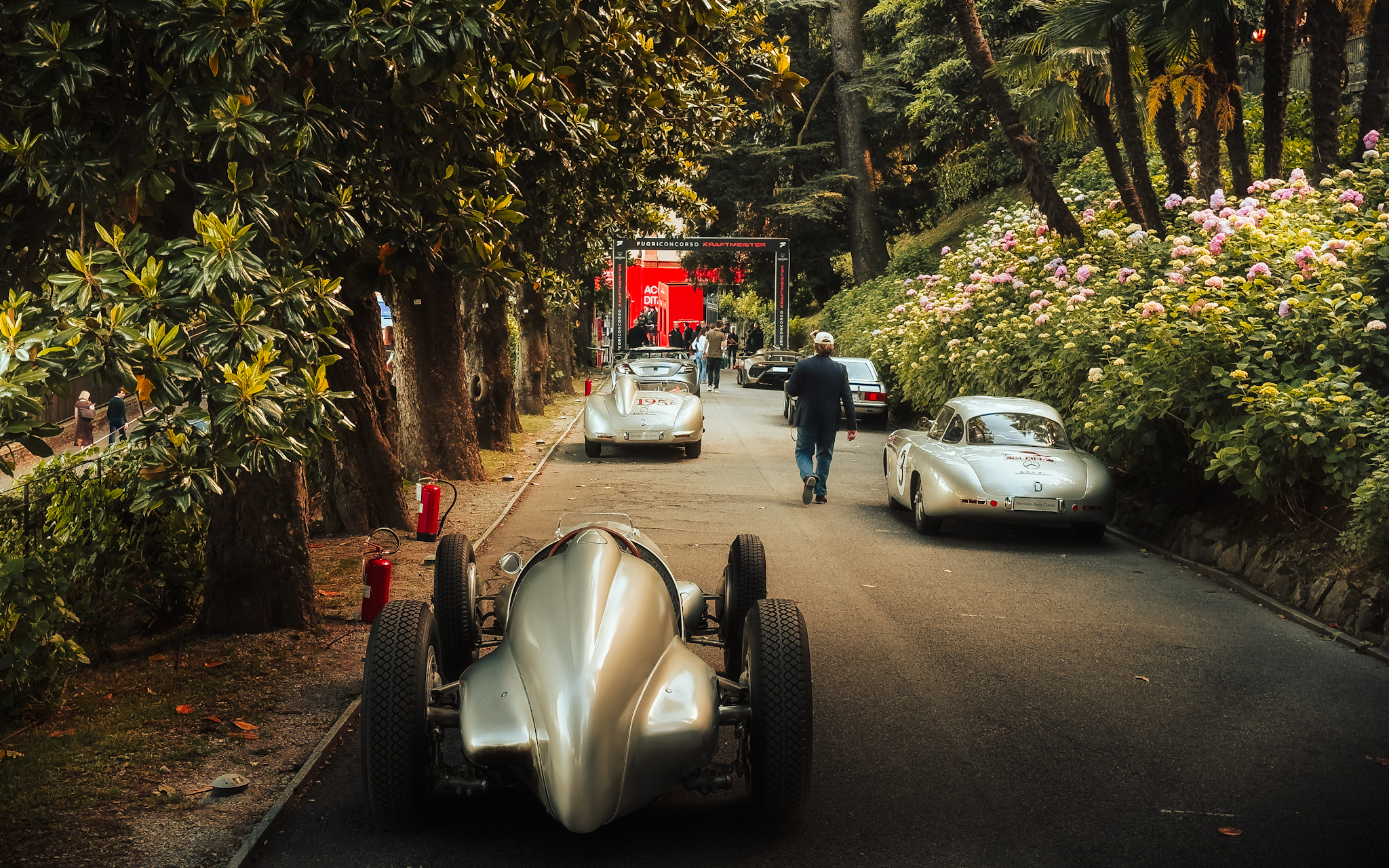
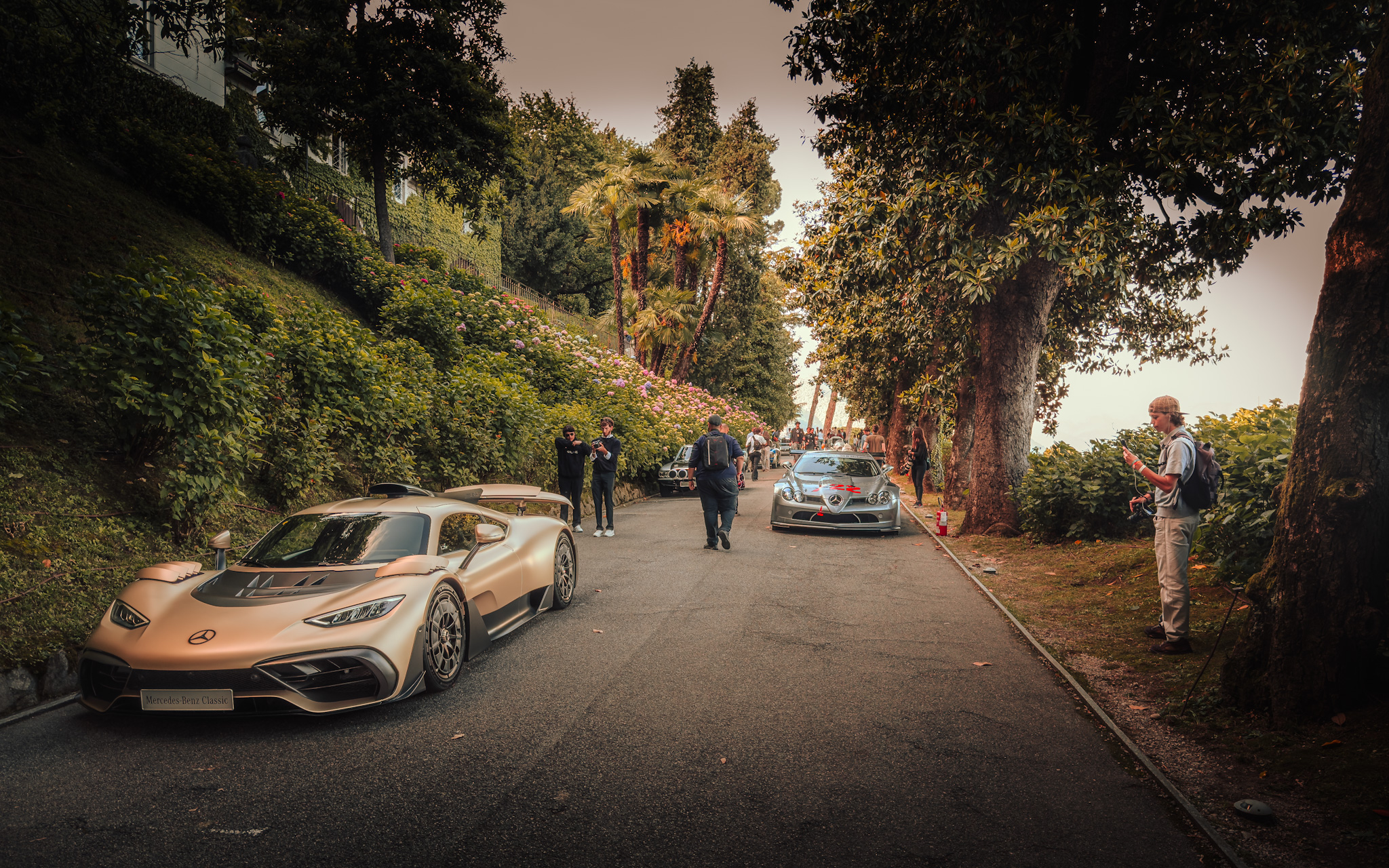
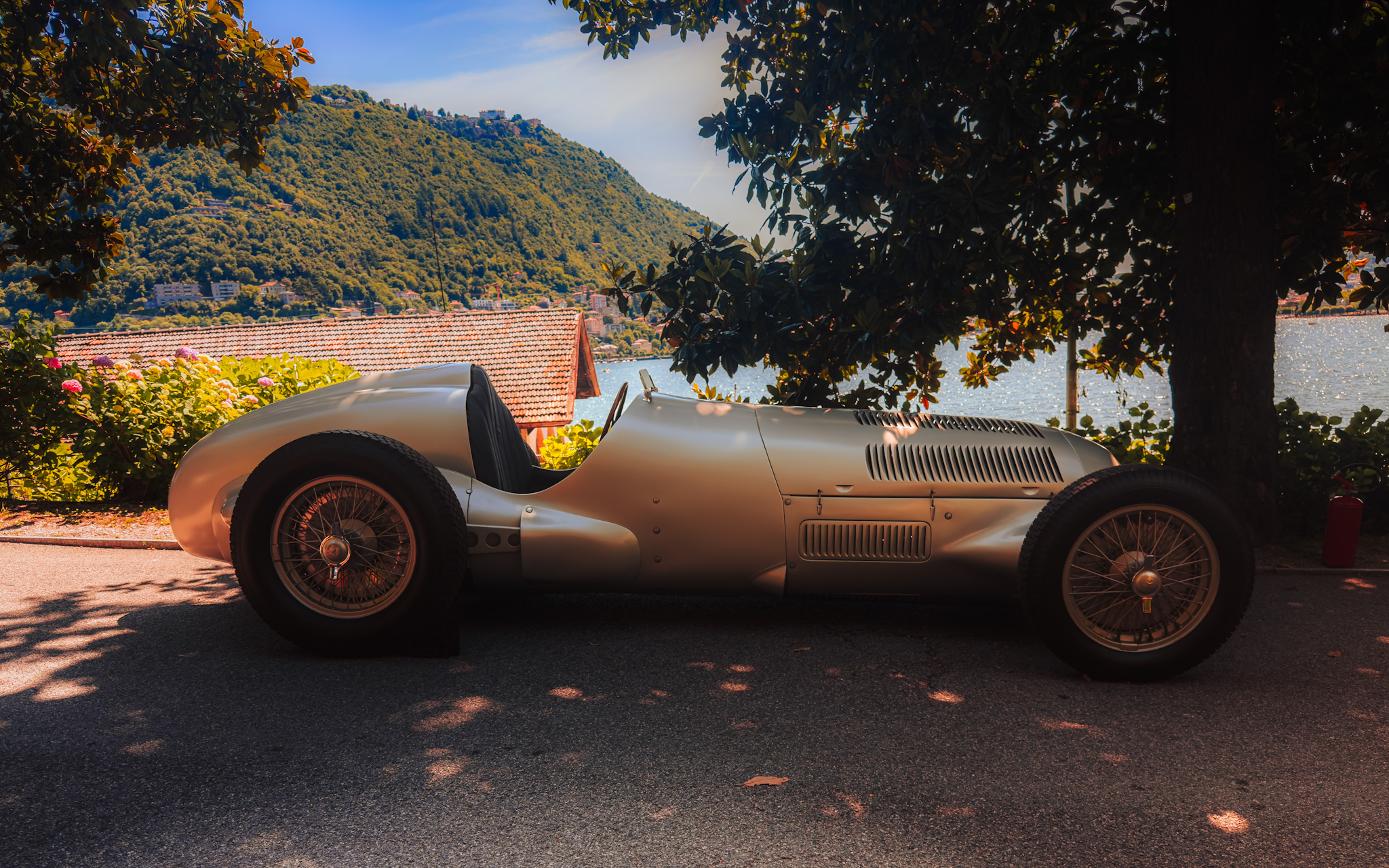
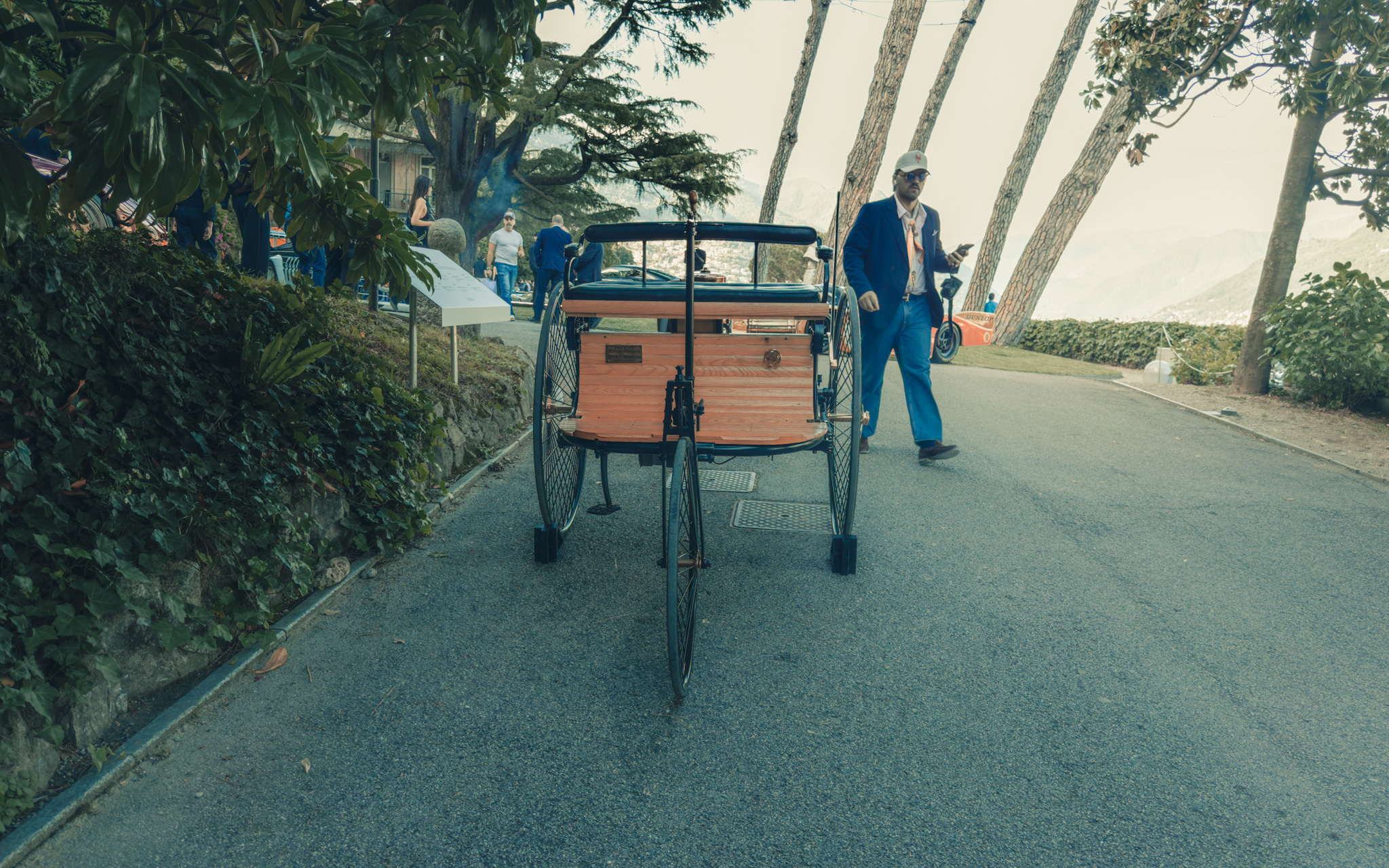
You come through the gates and the first thing you meet is the AMG ONE. From there the whole thing unspools backwards, the Mercedes story laid out in a single line. You walk it in reverse: the modern monsters first, then back and back through the silver arrows, the racers, the record cars, until you’re standing in front of the 1886 Patent-Motorwagen. The first one. The car that started all the others. You cross a hundred and forty years in the space of a garden path, and the strange thing is you feel the distance in your legs.
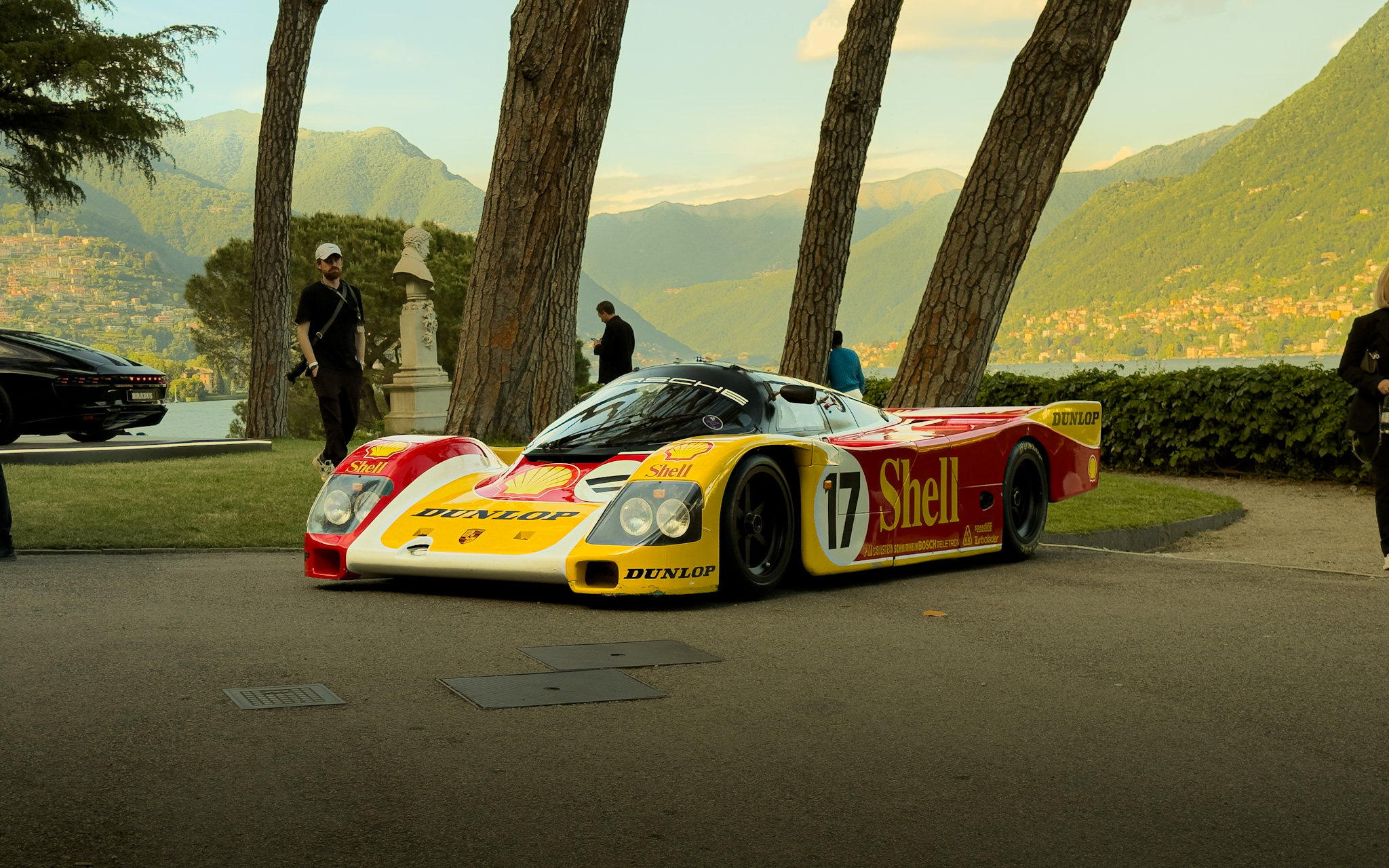
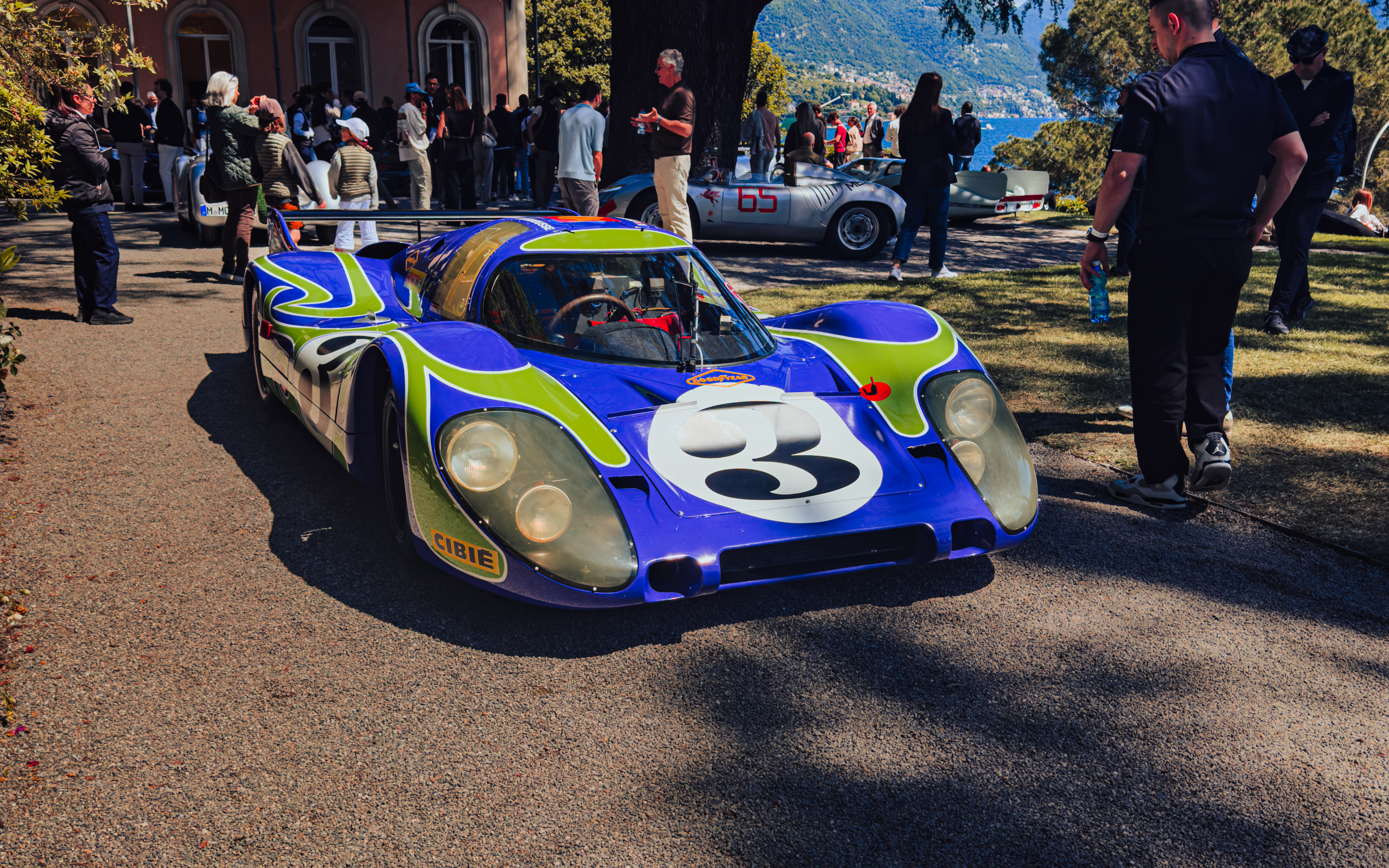
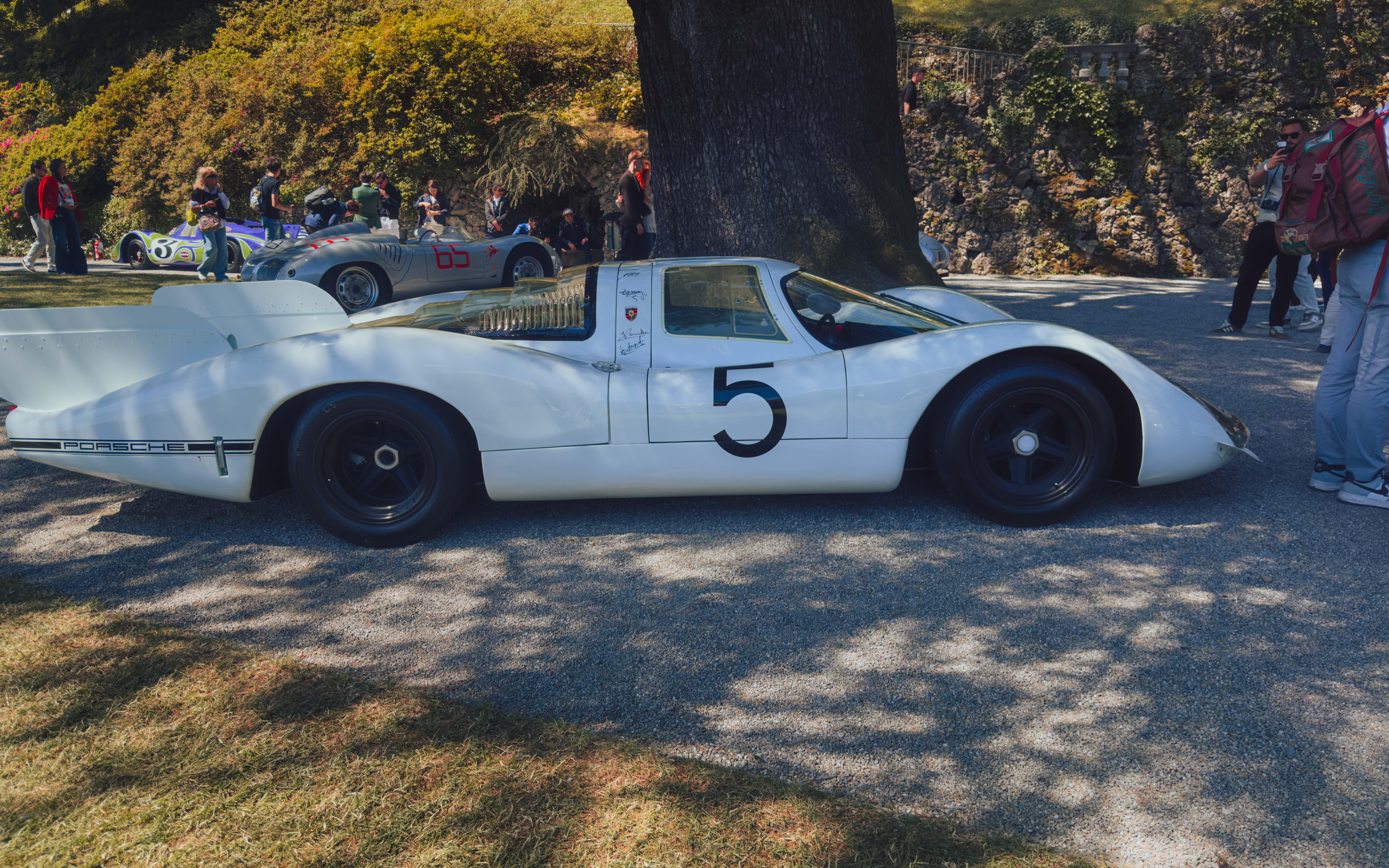
Then the trees open and there’s a Porsche 962C in Shell-Dunlop colours sitting under the pines, and the light through the branches is doing something to the paint, and you’re still taking that in when the lake reaches up and stops you completely. The view from Villa del Grumello is almost rude about it. It interrupts you mid-thought. For a moment the cars don’t matter, because the water and the mountains are right there and they were here long before any of this and will be here long after.
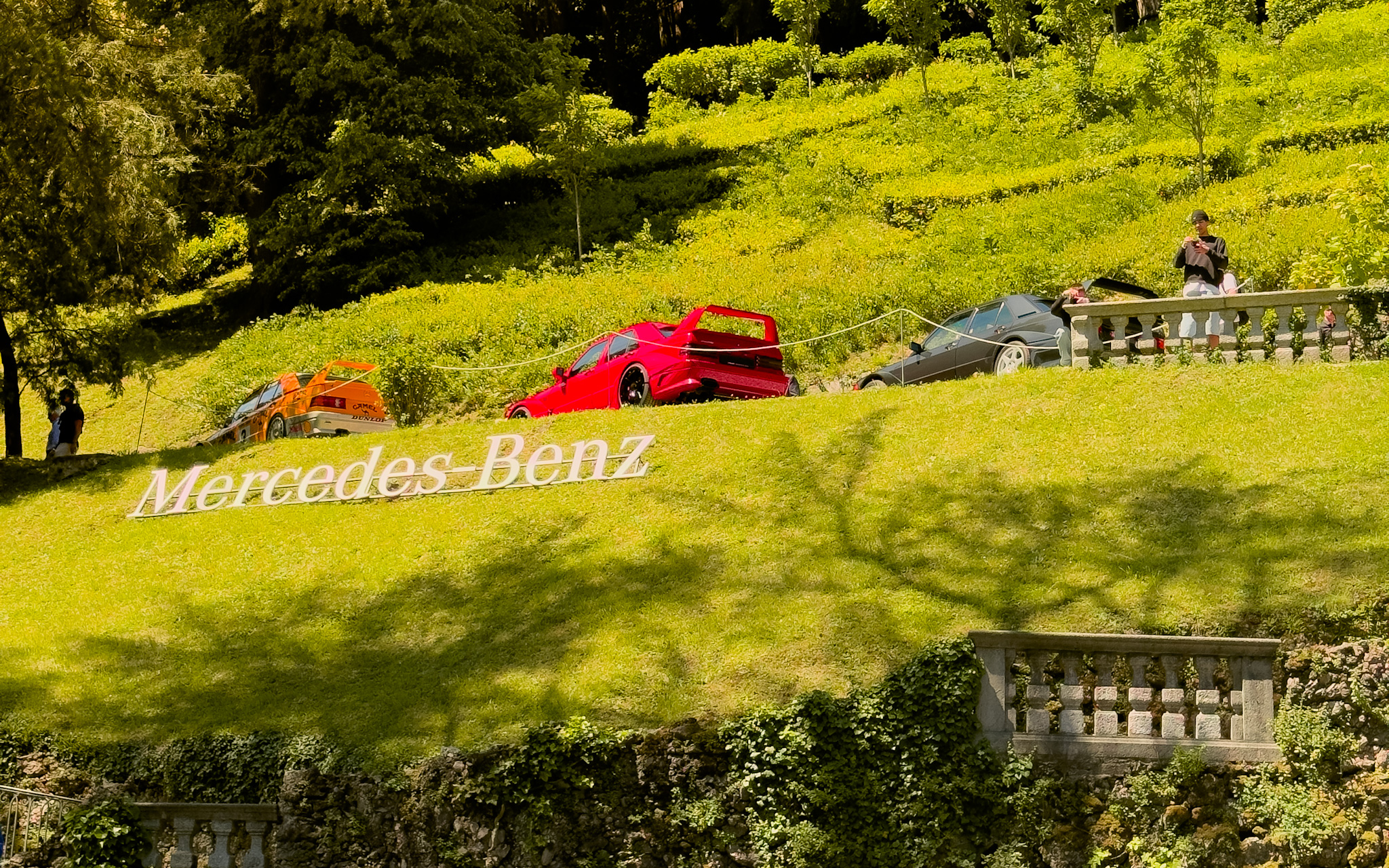
And then you turn around, and Mercedes has taken the hill.
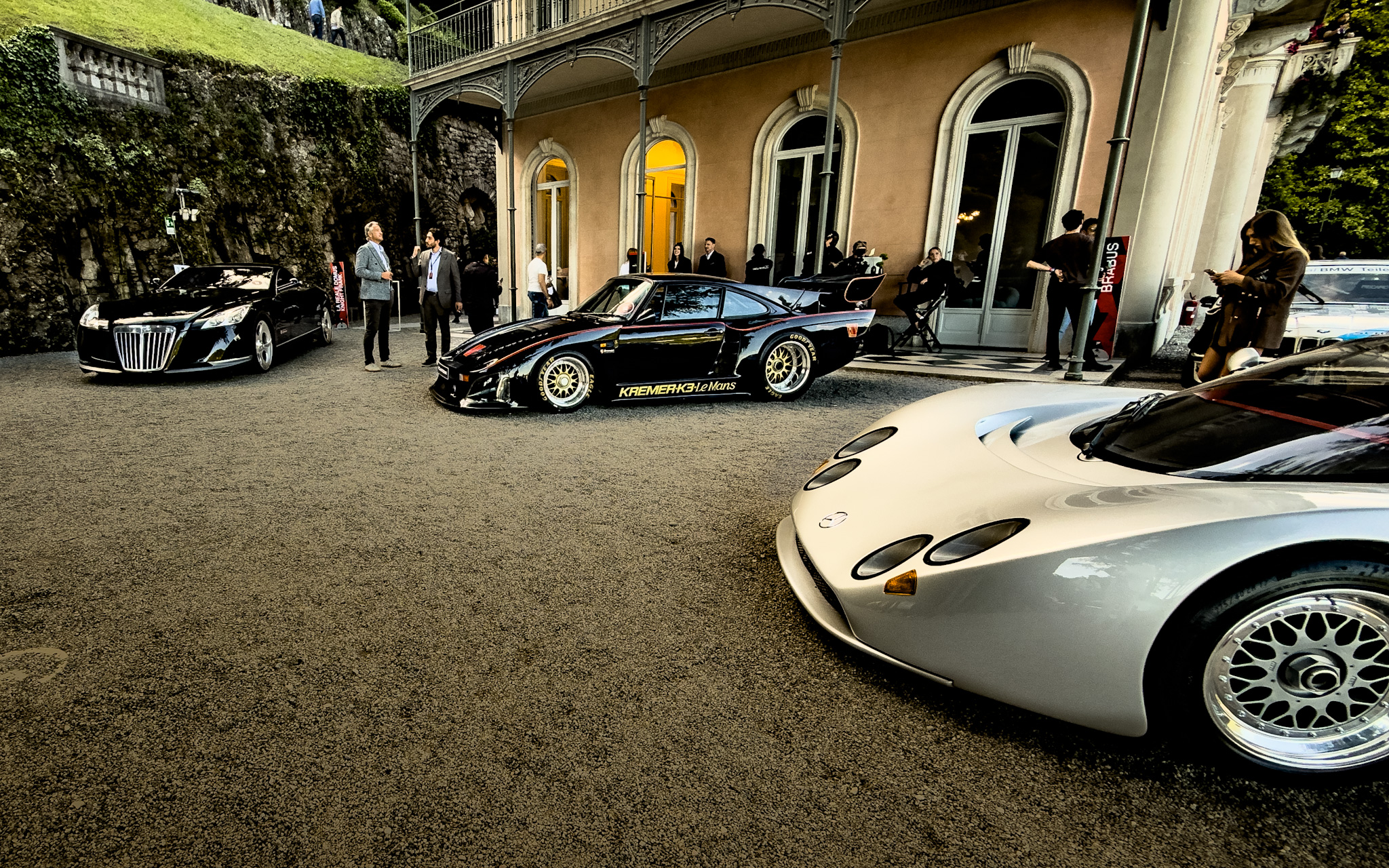
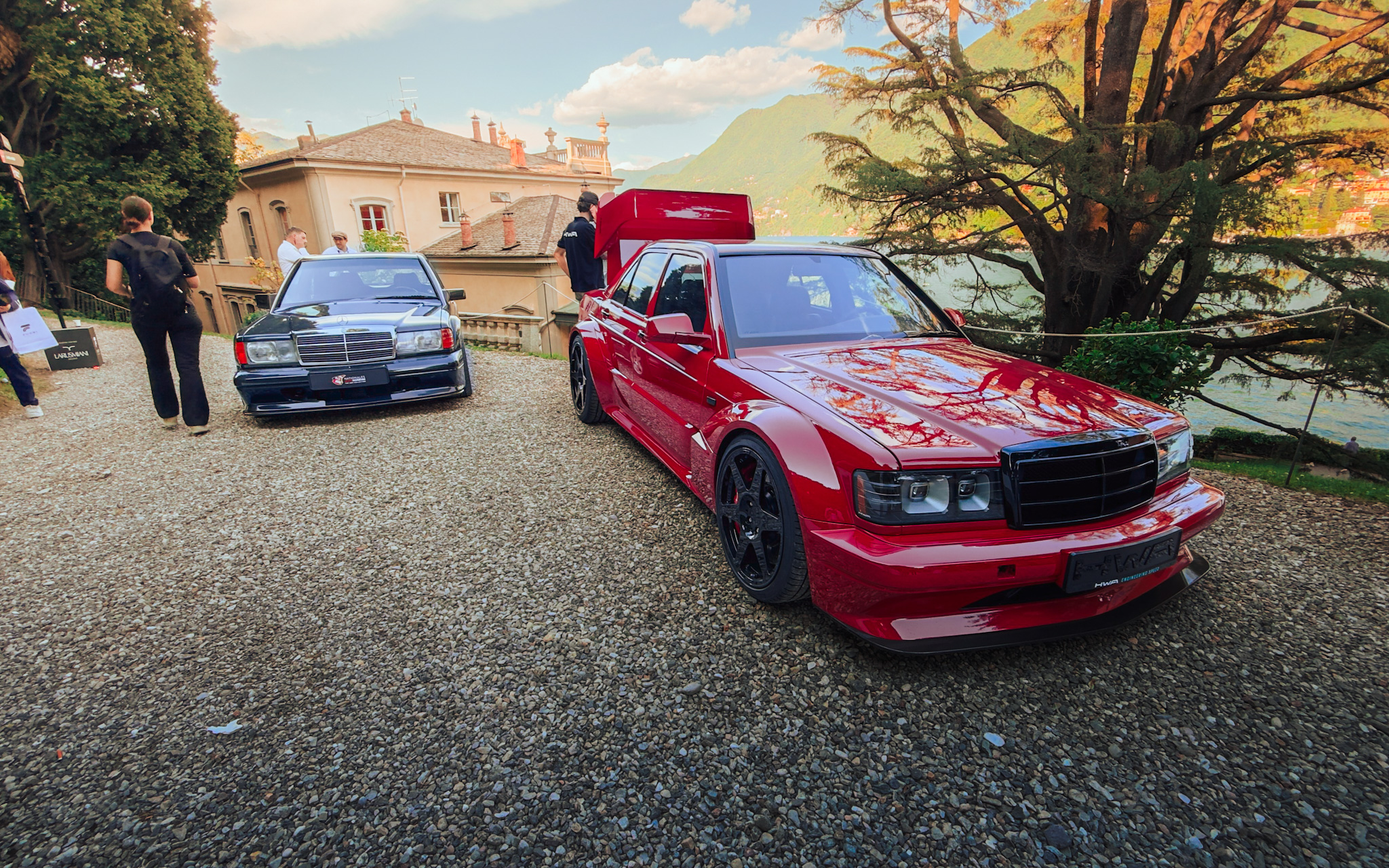
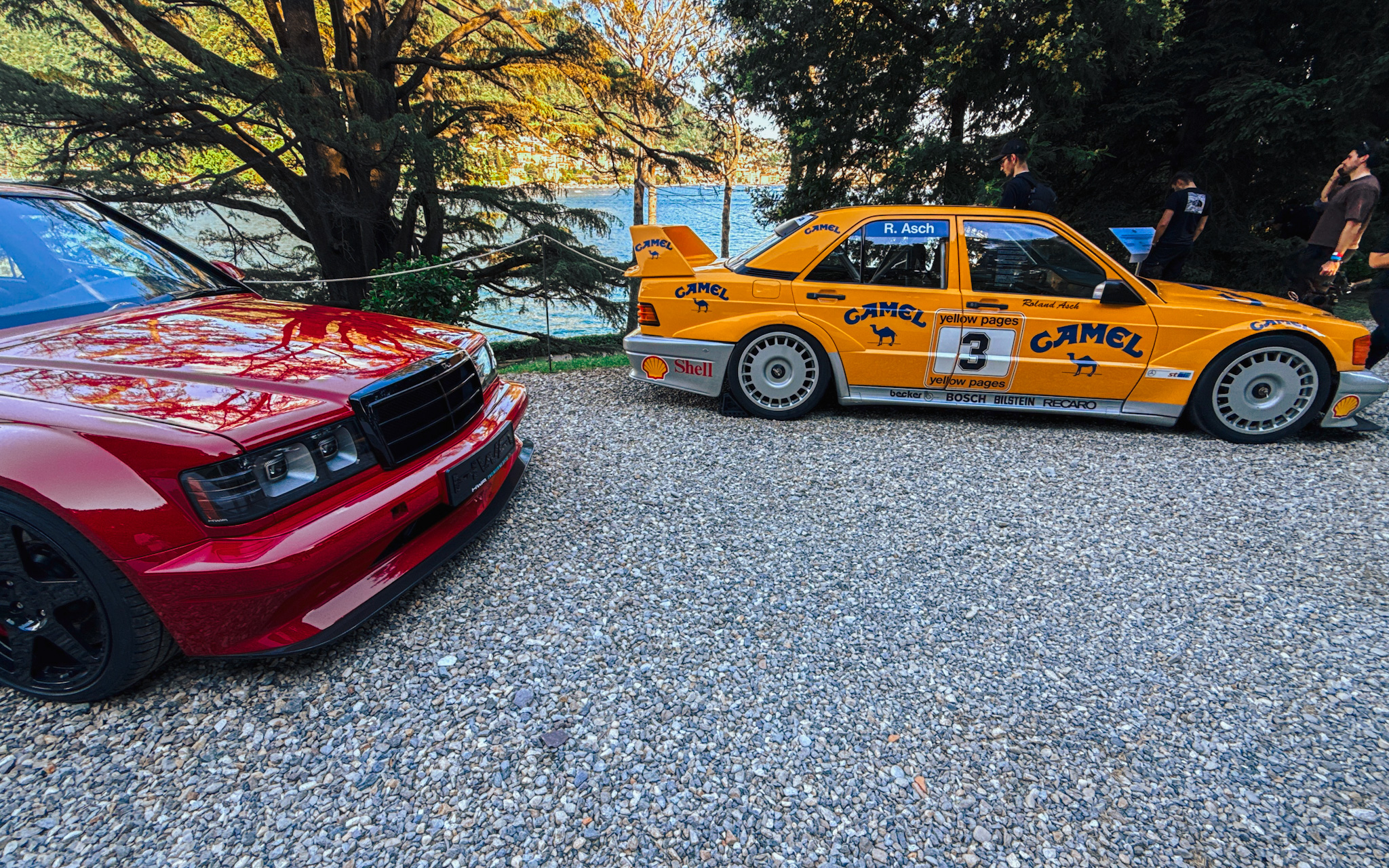
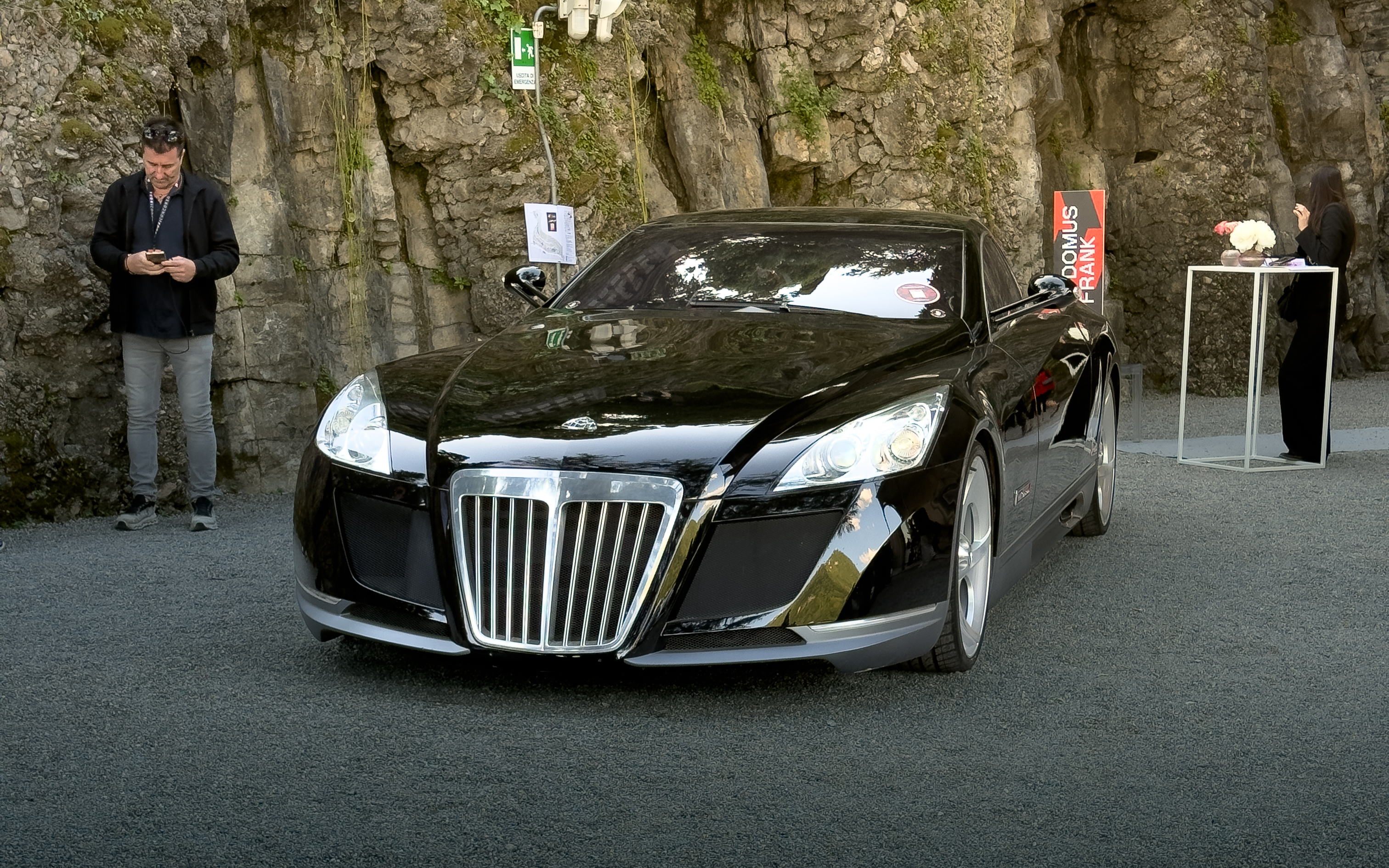
High on the slope, under a sign you can read from the water, three 190E EVOs sit in a row: a black one from the Loh Collection, a red HWA EVO, and a 190E EVO II in Camel colours. Your eye slides back down and lands on the new Brabus Bodo, the Maybach Exelero, the Lotec C1000. The actual Lotec. The one-off, the mad 90s hypercar that chased a top speed most cars will never see, parked on grass in the afternoon sun like it had pulled over for a coffee. I stood still for a second, longer than I meant to, just to make sure I was actually looking at it.
That’s the thing about this place. The cars don’t arrive in order of importance. A legend you’ve only ever seen in a book is just there, between two other legends, and nobody’s made a fuss about it. You have to keep your eyes moving or you’ll walk past something you’ll regret missing.
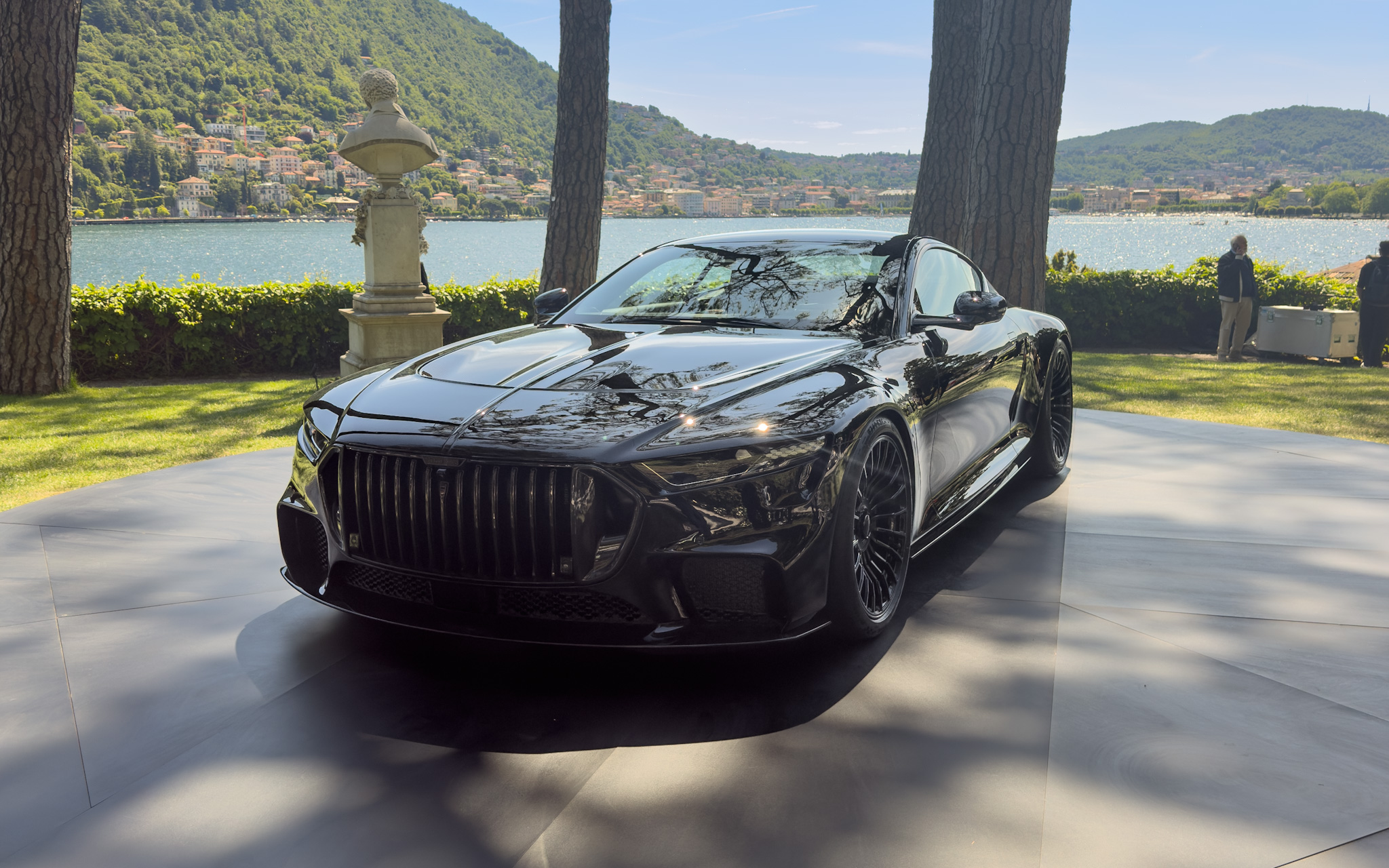
The Brabus is one of those that rewards stopping. They call it the Bodo, after the man who founded the company, and it’s his son — now running the place — finally building the sports car his father always wanted to. A thousand-horsepower V12 under a full carbon body, a coachbuilt Brabus built in-house. It’s the kind of car that justifies the whole detour: independent, a little mad, built out of devotion as much as a business case.
A little further on, Mechatronik had brought the Kremer K3 — Walter Wolf’s car, the only road-going K3 the factory ever built, the same Walter Wolf who bolted an F1 wing onto a Countach and changed how those cars looked forever. It sat there freshly restored, all menace and wing, the kind of 935 that was never really meant to wear a number plate.
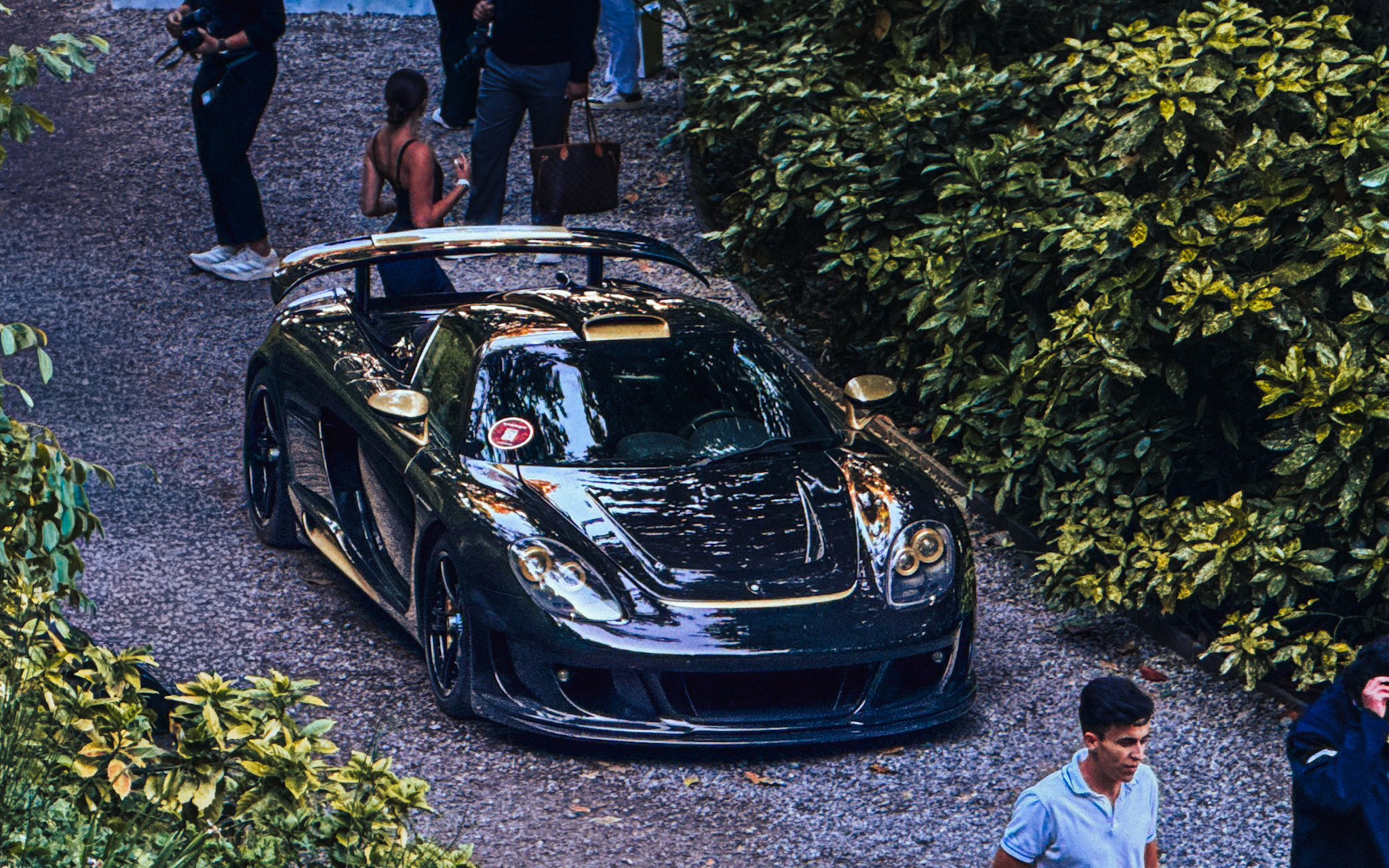
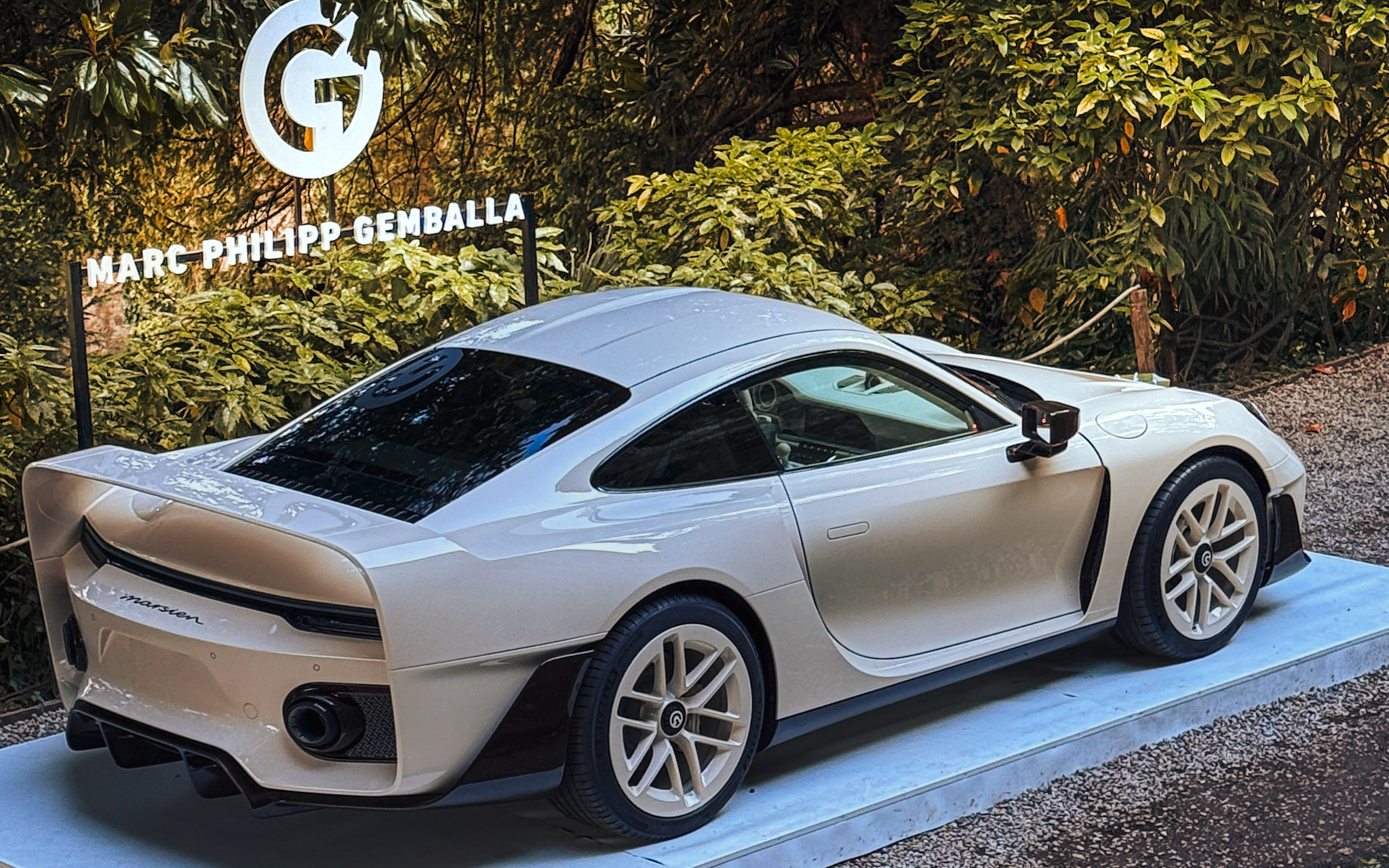
The two Gemballas told a whole story between them. The old Mirage GT, Carrera GT underneath, wore a metal-flake rainbow you almost couldn’t photograph properly under the trees. A few feet away sat Marc Philipp Gemballa’s Marsien — a 911 reimagined as something that could leave the road entirely, raised on adaptive suspension and dressed in bronze-tinged carbon. Decades apart, the same restless need to take something fast and make it stranger.
But the corner I kept coming back to was the HWA. It sits next to a real 190E 2.5-16 EVO, and that pairing is the whole point — you need the old one there to see what they’ve chased. The new car is that shape pulled tight and low, wider, meaner, most of it carbon now. They’ve swapped the four-cylinder Cosworth that made the original famous for a V6, and I know that’s the kind of thing that’s supposed to bother a purist, but I couldn’t bring myself to care. I’d heard one of these earlier in the week, working its way through the streets of Como, and that sound settled it. I just loved that it existed — that someone looked at a touring-car icon and decided to build the version people would actually drive, not just admire. I stood with the two of them a while, the old one and the answer to it, and the only thing I felt was glad.
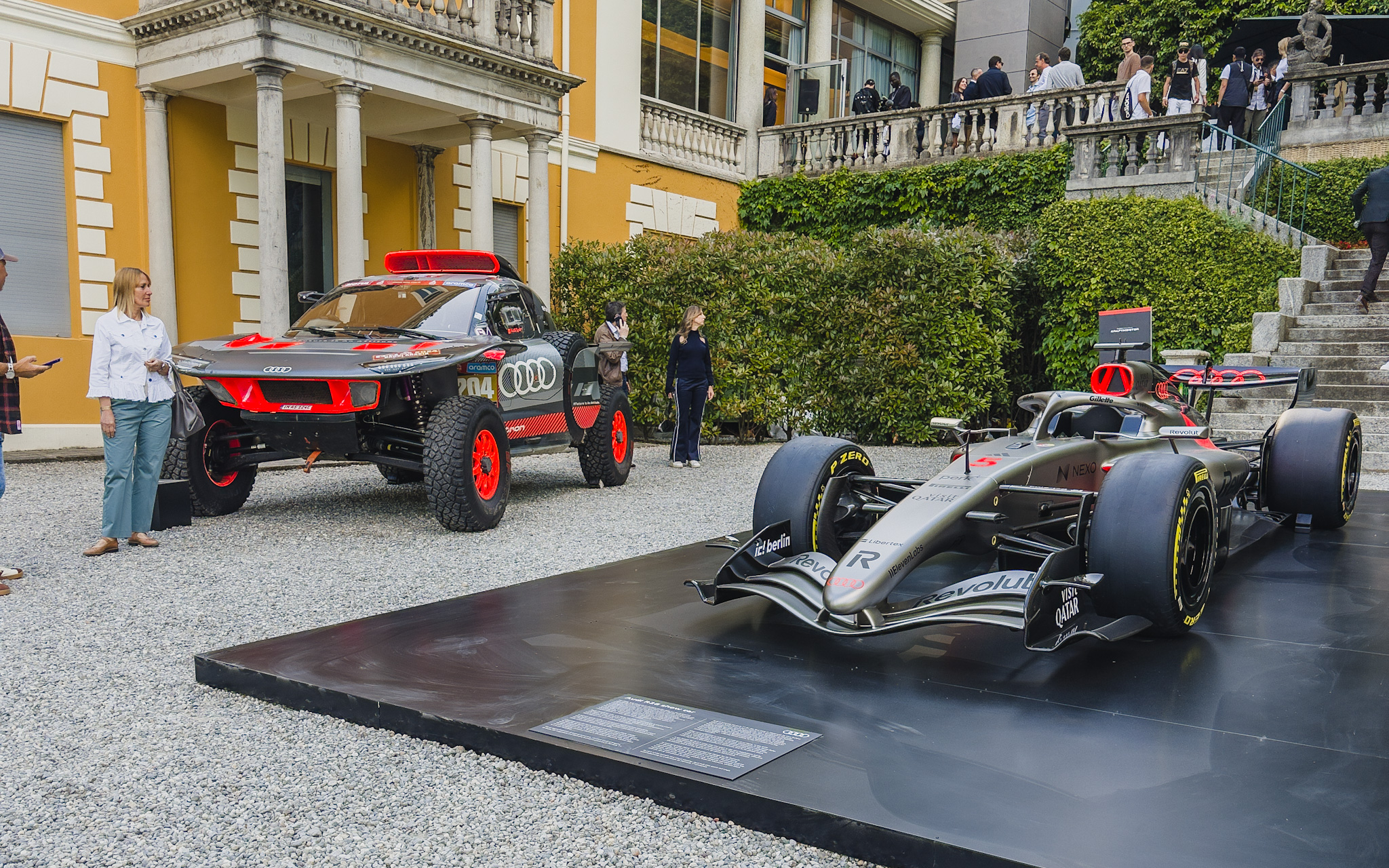
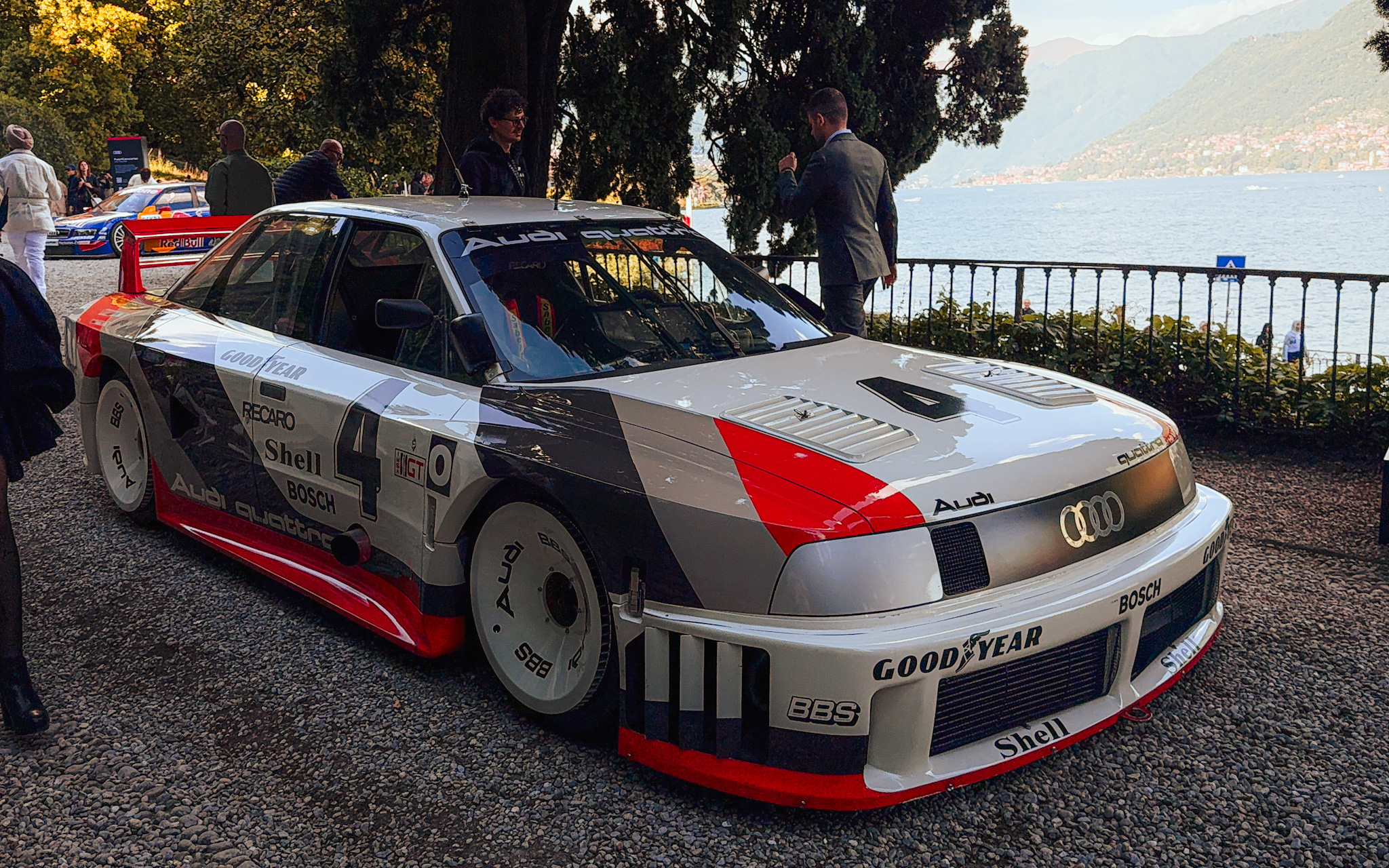
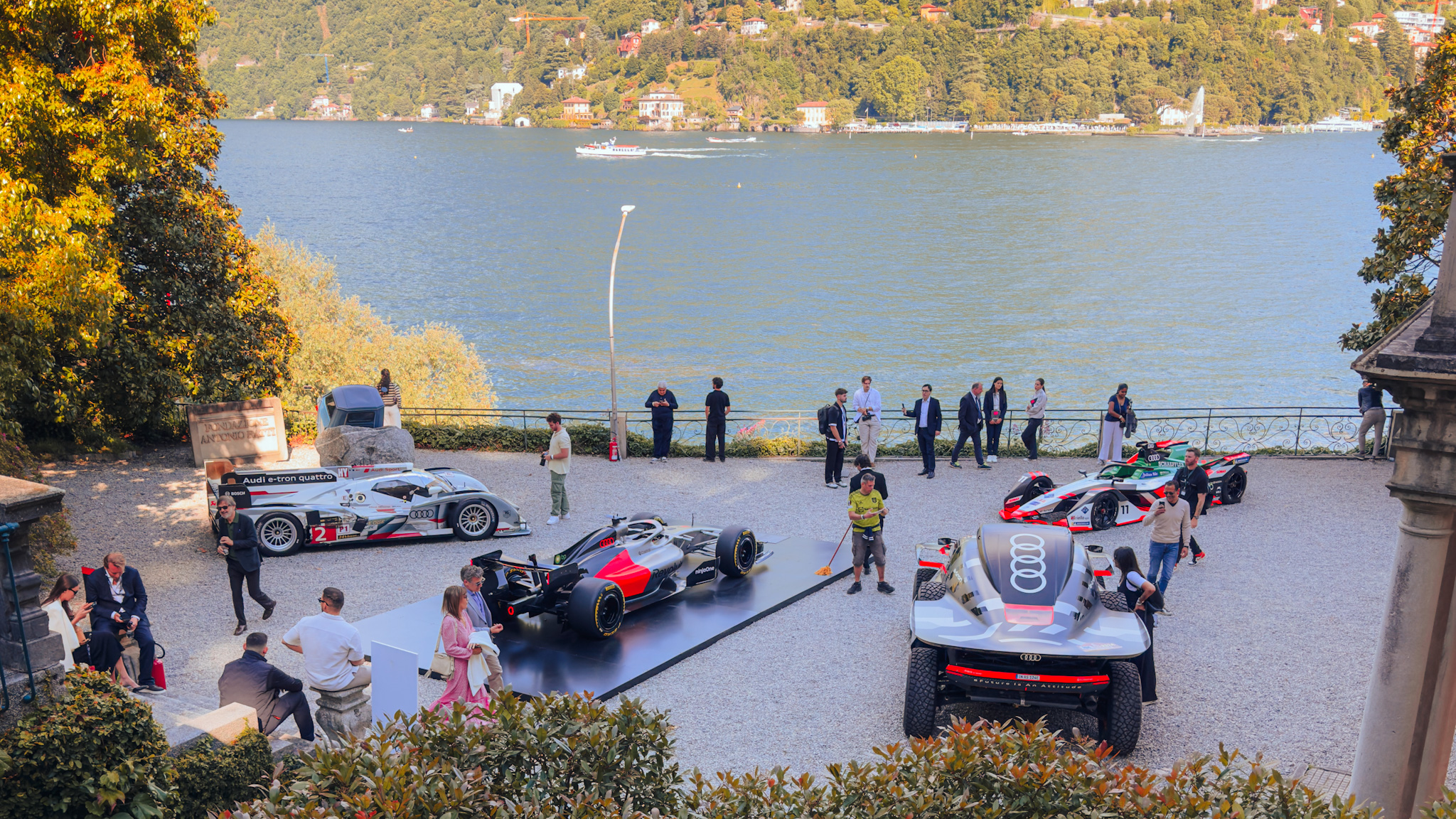
Over at Villa Sucota, Audi had taken the entire villa and turned it into an argument about racing. You walk in past the short-wheelbase Sport quattro, the stubby Group B car that everyone who’s driven one seems to fall a little in love with, and then the 90 quattro IMSA GTO, windowless and furious, breathing through a duct the size of your arm. Then the Le Mans cars, and this is the part that got me — the diesel R15 from the Capello, Kristensen and McNish era of Audi dominance, and next to it the RS Q e-tron that quietly went and won Dakar, the strange brilliant thing that runs electric drive across the dunes. Each one feels like a chapter: the rally cars that built the name, the endurance machines that proved it, and at the end of the line the R26 Formula 1 car, marking the start of something new. You stand in front of it with all that history banked up behind you and you realise the room isn’t showing off any one car. It’s pointing. It’s saying, here’s the road that got us here, and here’s where it goes next.
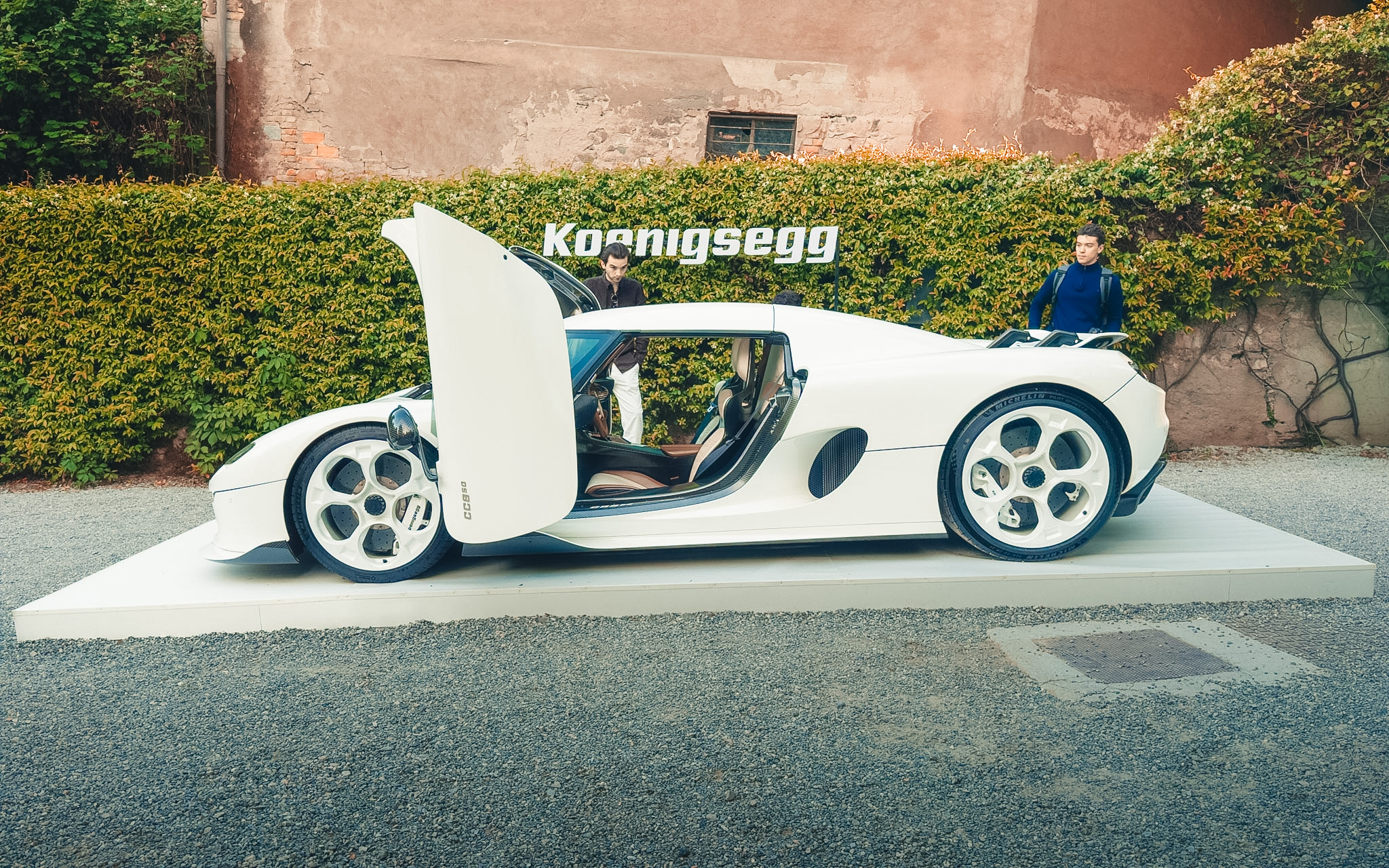
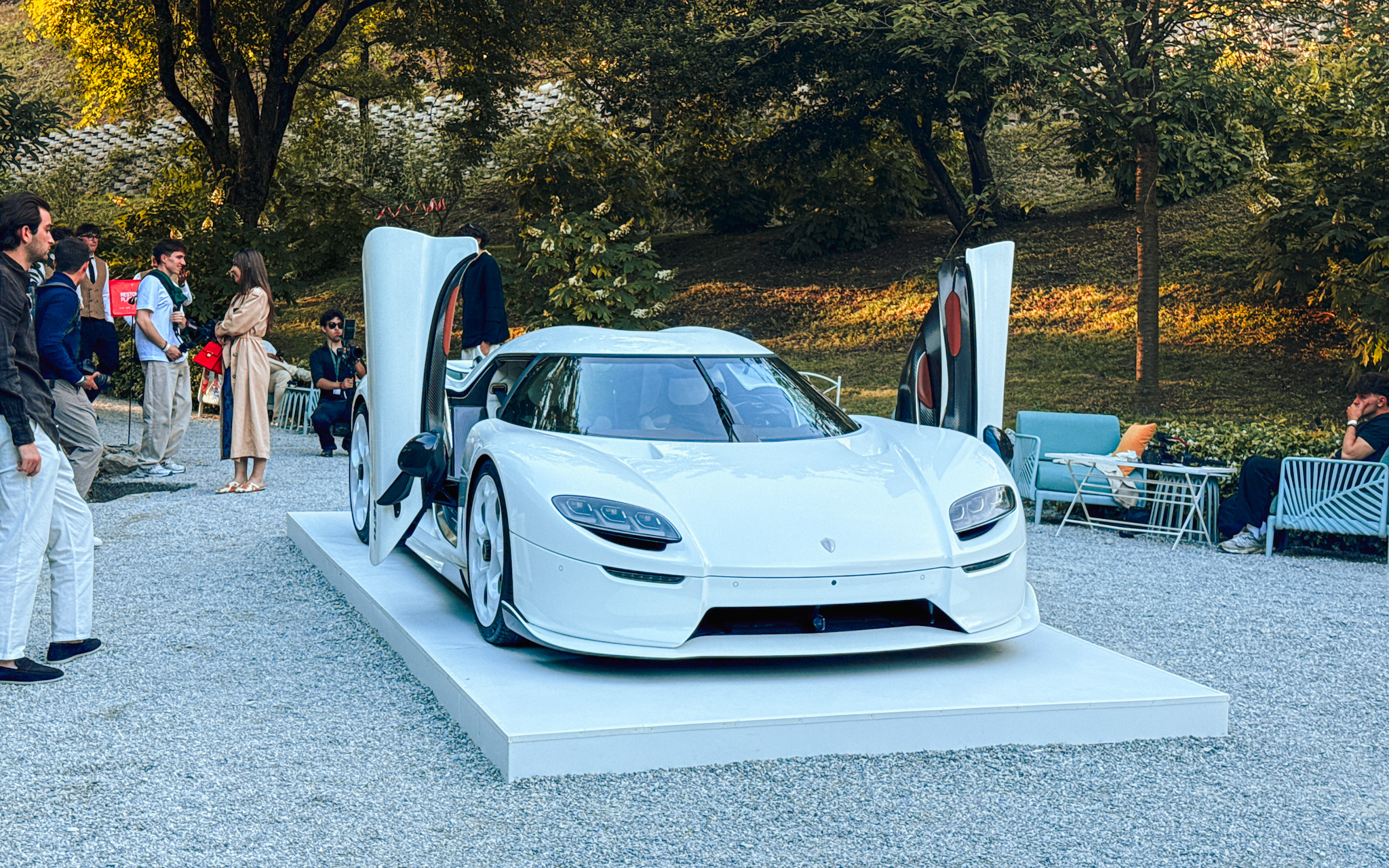
Somewhere in all of it I ended up by the Koenigsegg stand, talking to Oscar, who lives in that world, about what it means for a company like Koenigsegg to start pulling a younger crowd. It’s a real question and it doesn’t have a clean answer: engineering purity on one side, a different kind of buyer on the other. What stayed with me was how seriously he treated that balance — keeping the brand obsessive without making it feel closed off to the next generation. It’s the sort of thing that only makes sense to talk about while the cars it’s about are sitting a few feet away.
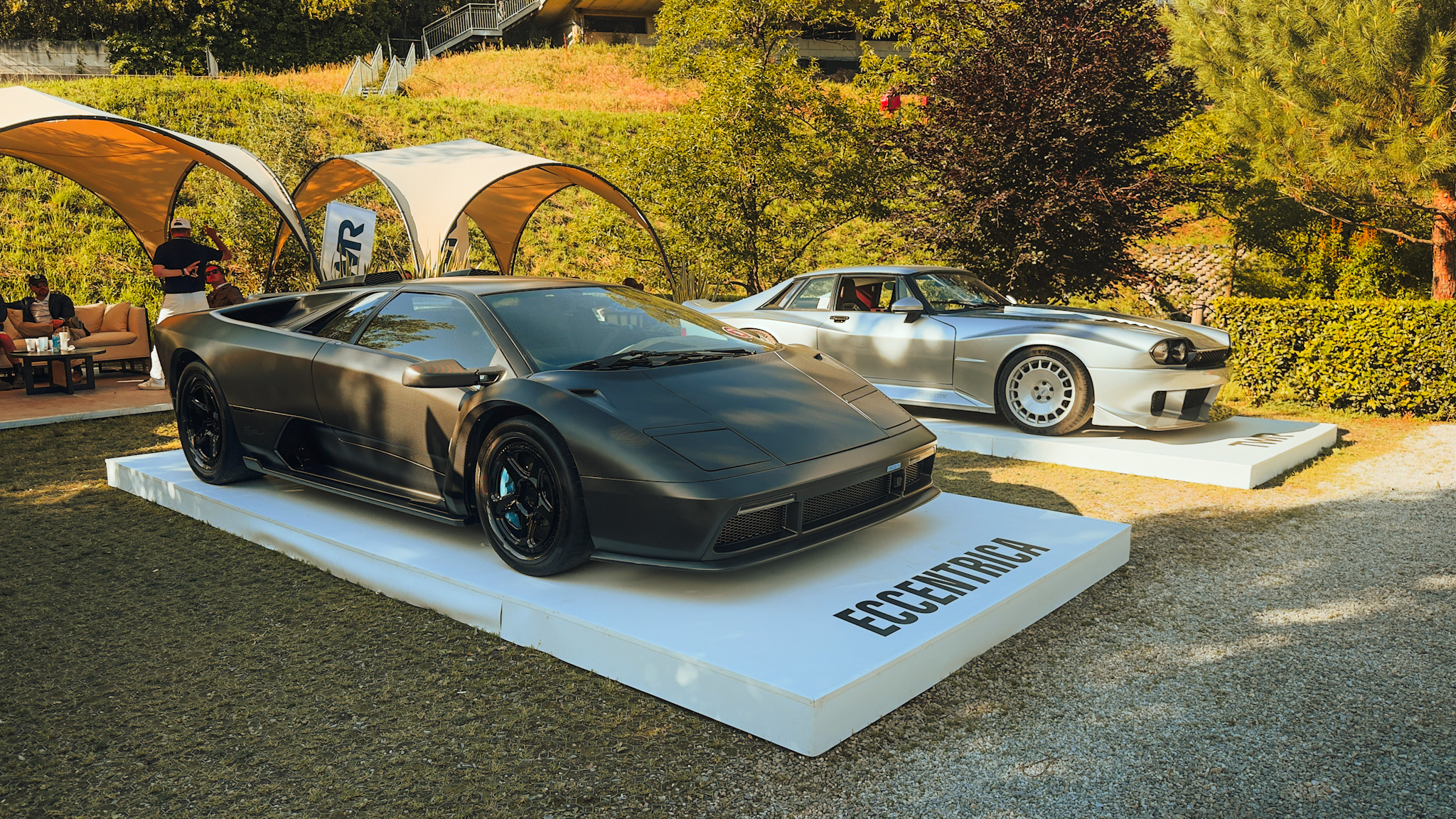
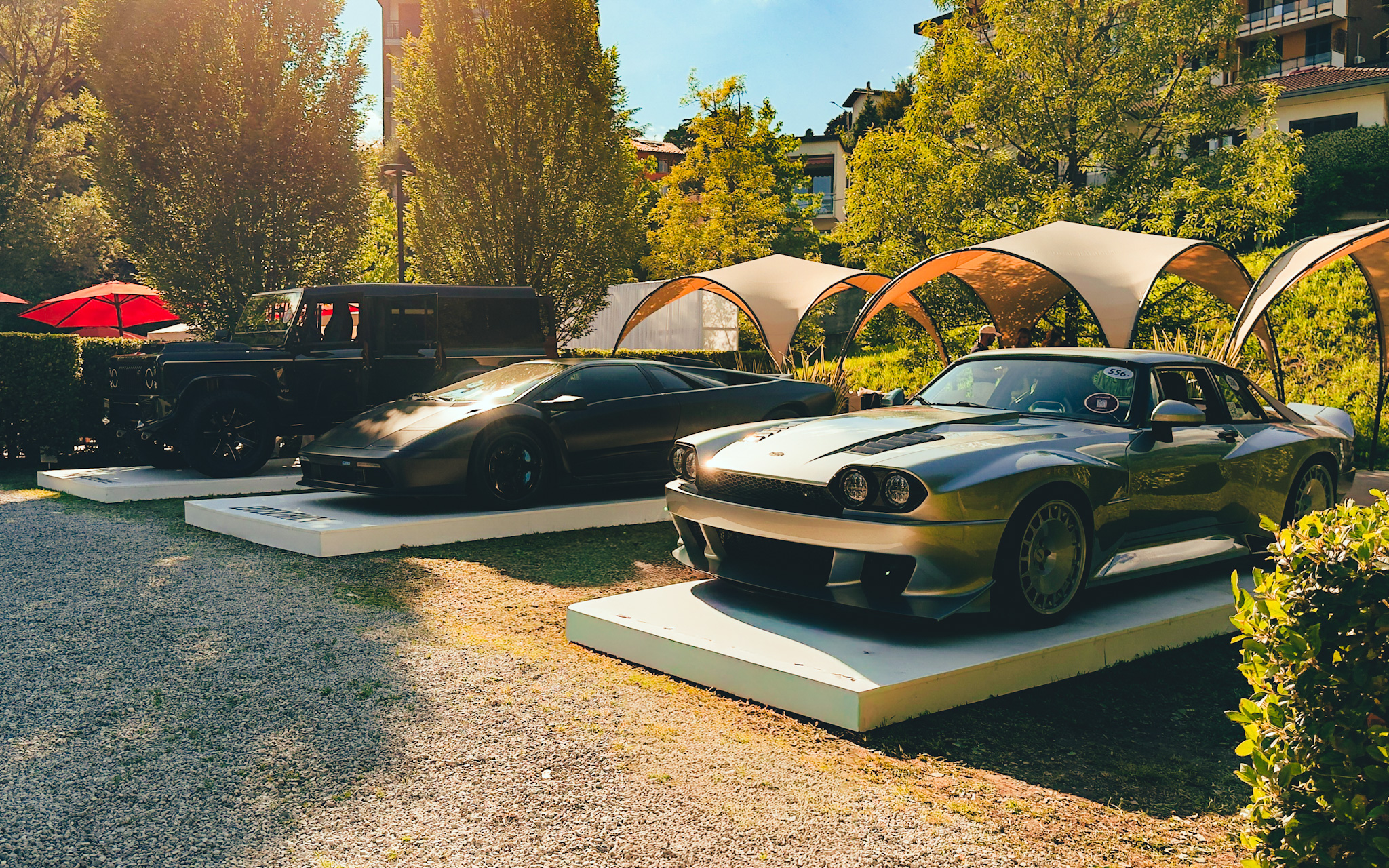
Before we left I spent a while in the restomod corner, which FuoriConcorso had opened up this year beyond the German theme. The one that held me there was the Eccentrica, built on an early Diablo and rebuilt so completely it becomes its own thing — naked carbon, the engine left on show, a six-speed gate, reverse handled electrically because every scrap of the original casing had been repurposed for going forward. It’s not nostalgia. It’s someone taking a car they love and asking what it could have been with thirty more years of knowing how.
We stayed until they made us leave. Not because we were waiting for anything to happen, but because every time you turned your head there was another detail you’d missed, another crease in the bodywork, another car you somehow still hadn’t properly looked at. It is a place that refuses to be finished. I walked out still wanting more of it, which is, I’ve decided, the only honest way to leave somewhere this good.